• Skip to secondary menu
  • Skip to main content
  • Skip to primary sidebar

Geometry Code

Sacred Geometry Media Resource Blog

Sacred Geometry Resources, Books, Conversations, Art Prints, Cards, Screensavers, Videos, Patterns, Blog and more
  • Intro
  • Shop
    • Bibliography
    • Gallery
      • Gallery: Martineau Solar System
      • Gallery: Sacred Geometry Animations
    • Sacred Geometry Art Cards
    • Sacred Geometry Art Prints
    • Sacred Geometry Books
      • Sacred Geometry Design Sourcebook (SGDS)
        • SGDS: Free Samples
          • Sacred Geometry Design Sourcebook – sample – (page 101) Circle on Each Dodecagon Edge Fractal
          • Sacred Geometry Design Sourcebook – sample – (page 189) Great Pyramid Fold-up Pattern with Pi and Phi Proportions
          • Sacred Geometry Design Sourcebook – sample – (page 216) Great Dodecahedron Fold-up Pattern
          • Sacred Geometry Design Sourcebook – sample – (page 224) Star Tetrahedron Fold-up Pattern
          • Sacred Geometry Design Sourcebook – bonus page – Kepler’s Solid
        • SGDS: FAQ
        • SGDS: Kudos
        • SGDS: Ordering
        • SGDS: Bookstores
        • SGDS: Printable Order Form
        • Sacred Geometry Design Sourcebook – Paypal Orders
      • Mandalas der Heiligen Geometrie (MDHG) das Universale Design der Natur (SGDS German edition)
      • Book: The Geometry Code: Universal Symbolic Mirrors of Natural Laws Within Us; Friendly Reminders of Inclusion to Forgive the Dreamer of Separation by Bruce Rawles
        • The Geometry Code book: Preface by the Author
        • The Geometry Code: book endorsements
        • Acknowledgments (abridged) for The Geometry Code book
        • Buy The Geometry Code book
        • Table of Contents: The Geometry Code book
    • Sacred Geometry Calendars
    • Sacred Geometry Digital Products
    • Sacred Geometry Screen Savers
      • Sacred Geometry Screen Savers: The Geometry Code – Meditation Tool, ScreenSaver, and eBooklet
        • Praise for The Geometry Code – Meditation Tool, Screen Saver, and eBooklet
      • Sacred Geometry Screen Savers: LightSOURCE screensavers and DVDs
    • Sacred Geometry Toys and Tools
      • Use Zometool to build models from SGDS
    • Sacred Geometry Video Patterns
      • Video Patterns: Circulars, Triangulars and More
      • Video Patterns: Flower of Life and Rectangulars
      • Video Patterns: Hexagonals
      • Video Patterns: Pentagonals
      • Video Patterns: How to use
    • Sacred Geometry Videos
    • GeometryCode.com Affiliates
  • Resources
    • Blog
    • Bulletins
      • 2015 Bulletins
      • 2014 Bulletins
      • 2013 Bulletins
      • 2012 Bulletins
      • Sacred Geometry email bulletins archives through 2011
  • About
    • Events
      • Annual Sacred Geometry Multimedia Contest – legacy page
    • Contact Us and Recent Visitors
    • Donations and Contributions
    • Support
    • Our Web Sites
    • Sacred Geometry – Consulting Services
    • Link To Us
    • Media Kit – Elysian Publishing and Bruce Rawles
    • Sacred Geometry Glossary
    • Copyright Information
    • Disclaimer
  • Free
    • Platonic Solids – Fold Up Patterns
    • Archimedean Solids – Fold Up Patterns
    • Polyhedra: Illustrations of Platonic And Archimedean Solids
    • Polyhedra: Math Tables for Platonic And Archimedean Solids
    • How to graphically derive the Golden Ratio using an equilateral triangle inscribed in a circle
    • How to calculate the area of the Vesica Piscis
    • Rotating Star Tetrahedra, Polyhedra – Animations and Ray Traced Images
    • How to graphically make the “Seed of Life” pattern using a compass
    • How to graphically divide a line by the Golden Ratio using a straightedge and compass
    • Sacred Geometry Bookmarks – Pentagonal Spirals
    • Sacred Geometry Wallpaper (desktop image) – Venus and Mars per Martineau
  • Contact Us/Subscribe
  • Site Map
You are here: Home / Archives for sacred geometry architecture

sacred geometry architecture

Highlights from the January Post Archives on GeometryCode.com

Thursday, 1 January 2026 by Bruce Rawles

I occasionally encounter ICYMI (In Case You Missed It) anthologies of archives from publications that have been around a while. Since that’s true for GeometryCode.com, I thought I would do the same for this site. I’m sure there are plenty of new (or newish) visitors who have probably never seen many of the prior posts from this website, as well as seasoned readers who may have missed or perhaps forgotten some of the content we’ve featured over the years… since 2009 (and before that for a decade or so on other websites such as our former online home, intent.com. (Thanks to the “Wayback Machine” for maintaining archives of our original, primitive (embarrassing by today’s standards) work in our early web explorations. The format and underlying architecture have changed significantly, but the content of “Sacred Geometry Home Page” hasn’t changed much since this snapshot from Jan. 15, 1998!)

With a bit of clerical assistance from AI, I’m presenting a retrospective (by month, starting with January) of some of the 222 prior posts from GeometryCode that might merit revisiting. However, I will still add new finds as they cross my path, so this quasi-sabbatical won’t be devoid of new content. If you (or someone you know) has something that would enhance this website, please let me know! Thanks for your many years of support while I spend a few months (probably a dozen) re-exploring perennial topics via prior posts with evergreen concepts, ideas, and imagery.

I am using chronological order (rather than the more conventional reverse chronological order), putting recent posts at the bottom to give buried content some breathing room for new or renewed exposure.

Welcome to our curated recap of some of the blog posts published in January across recent years on GeometryCode.com. Each entry below includes the post title, published date, and a graphic image from its content, presented as enticements for the curious to review prior content.

GeometryCode.com — Highlights from January Posts (from 2009 through 2025)

  • Intention and Symbols
    Published January 2009
    Villarceau circles: torus plane intersection yields vesica piscis cross-section
  • QR code for GeometryCode.com
    Published January 2011
    QRcode for www.GeometryCode.com
  • ZomeTool sculpture at Denver Art Museum
    Published January 2012
    ZomeTool-DenverArtMuseum2
  • Sacred Geometry bulletin for January 2013
    Published January 2013
    mirrored pentagon grid
  • Local Author event in Castle Rock, CO 18Jan2014
    Published January 2014
    Local Author Showcase - Castle Rock, CO
  • GeometryCode bulletin for January 2015
    Published January 2015
    7thTermFibonacciGarden-MichaelSchneider
  • The Dance of Venus
    Published January 2016
    The Dance Of Venus poster by John Martineau
  • Multiplication Tables on Circular String Art lead to Mandelbrot and classic curves
    Published January 2017
    Mathologer - String Art Mandelbrot
  • Assorted 3D model geometry links of interest
    Published January 2019
    HexaSticks 3D model
  • 3D Geodesic Animation inspiration
    Published January 2020
  • Geometric Lamps … and Coloring Pages by HYBYCOZO / COZO
    Published January 2022

These last few summaries are courtesy of ChatGPT. Each entry below includes the post title, published date, and a multi-paragraph summary of its content.

  • Cedar Sprig Symbolism: Freedom or Fragmentation?
    Published January 2023

    In this thoughtful January post, Bruce Rawles reflects on participating in a local New Year’s Day Peace Hike in Yachats, Oregon. He uses the symbolism of cedar sprigs as a metaphor for both individual and collective identity. He connects the fractal geometry of the cedar — with its self-similar branching patterns — to how we might view unity and fragmentation in human thought and social life.

    The post weaves imagery from the hike with contemplative commentary on how symbol and form interact: the geometric complexity of cedar sprigs becomes a lens to examine inclusion, peace, and the fractal nature of experience. Rawles draws philosophical connections between natural patterns and inner psychological landscapes, prompting readers to consider whether they view life through lenses of separation or wholeness. This piece blends personal narrative with meditative geometry, exemplifying the blog’s broader mission of uniting mathematical form with lived experience.

  • 2024 Martineau Solar System Calendars Available Now
    Published January 2024 (note that calendars are available again for 2026!)

    This post announces the release of the 2024 Martineau Solar System Geometry wall calendars — a perennial favorite among readers interested in precise geometric representations of planetary orbit relationships. The calendar series is built from ray-traced images that model the intricate spatial relationships among the planets, combining astronomical accuracy with sacred geometry aesthetics. These calendars serve both as functional datekeepers and as contemplative art pieces that invite reflection on the harmony of celestial mechanics.

    Beyond simply promoting the calendar’s availability, the post elaborates on how each month’s artwork is grounded in long-observed geometric patterns linking planetary motion to geometric forms. It draws a line from scientific modeling to artistic expression, inviting readers to contemplate how geometry underlies both the heavens and artistic representation. The narrative suggests that such resources — whether calendars, prints, or patterns — function as mirrors to natural law and can enrich both intellectual and aesthetic appreciation.

    Martineau solar system calendar -12 months

  • M. C. Escher’s Geometry and Illusory Perspectives Revisited
    Published January 2025

    This engaging post reflects on the work of Dutch graphic artist M. C. Escher and the ways that his art embodies rich geometric ideas. The author revisits classic Escher works — including impossible constructions, symmetry patterns, tessellations, and recursive spaces — and ties them into broader themes about how the human mind perceives space and structure. Escher’s art serves as a springboard for discussing how geometry, often thought of as abstract and formal, can be visually vibrant and conceptually playful.

    Throughout the text, readers are encouraged to appreciate how Escher’s imagery not only plays with visual paradoxes but invites a willingness to consider multiple perspectives simultaneously — a theme with deep resonance in non-Euclidean geometry and spatial reasoning. There’s also a conversation about how such visual explorations can inspire geometric creativity and reframe the way we look at patterns, proportion, and dimensionality in both art and mathematics. The author hints that future posts will build on these provocations, particularly around non-Euclidean geometry and related artistic interpretations.

    3 interlocking Escher-inspired reptile tiles

  • Thanks for exploring these highlights from GeometryCode.com’s January archives!

Filed Under: 2012 Bulletins, 2013 Bulletins, 2014 Bulletins, 2015 Bulletins, 2D Geometries, 3D Geometries, coloring books for adults, Fibonacci Numbers, Fractal Geometry, golden ratio, polyhedra, sacred geometry animation, sacred geometry architecture, sacred geometry art, sacred geometry books, sacred geometry calendars, sacred geometry metaphysics, sacred geometry news, sacred geometry toys, sacred geometry videos

Sacred Geometry in the documentary “Leonardo da Vinci” by Ken Burns

Sunday, 24 November 2024 by Bruce Rawles

Leonardo da Vinci (Ken Burns PBS documentary) screen snap of geometric shadow illustration

This evening we finished watching the excellent 2-part documentary “Leonardo da Vinci” by Ken Burns (and others) which – like everything Ken touches – was wonderful. No surprise, and, of course, highly recommended. Please support PBS and your favorite public/community/independent media, too!

Initially, I thought I would use my default browser (Brave) to find some still images from the documentary, and using this search term: “sacred geometry in Ken Burns Leonardo documentary” got this interesting – not bad! – AI-generated response:

In the Ken Burns documentary about Leonardo da Vinci, sacred geometry is explored as a key aspect of da Vinci’s work and thought process. Da Vinci’s use of geometric shapes and proportions in his art and designs is highlighted as a way to understand the underlying structure of the universe.

  • Geometric Lines and Proportions: The documentary shows how da Vinci used geometric lines and proportions in his paintings, such as the Mona Lisa and The Last Supper, to create a sense of balance and harmony. These geometric elements are also seen in his designs for machines and buildings.
  • The Vitruvian Man: Da Vinci’s famous drawing, the Vitruvian Man, is featured in the documentary as an example of his use of sacred geometry. The drawing depicts a nude male figure inscribed within a circle and square, demonstrating the mathematical proportions of the human body.
  • Nature and Geometry: The documentary explores how da Vinci saw geometry as a way to understand the natural world. He believed that the patterns and shapes found in nature, such as the spiral of a shell or the branching of trees, were evidence of a deeper geometric order.
  • Da Vinci’s Notebooks: The documentary features da Vinci’s notebooks, which contain his thoughts on geometry, proportion, and the natural world. These notebooks show how da Vinci saw geometry as a way to understand the underlying structure of the universe.

Overall, the documentary presents sacred geometry as a central aspect of da Vinci’s work and thought process, and shows how it influenced his art, designs, and understanding of the natural world.

Check it out. The topic of sacred geometry – although not referred to by that name – makes a cameo appearance in this 2-part series among Leonardo’s wide range of mathematical and scientific interests which, in turn, are just a small portion of the depth and breadth of the realms explored by this amazing historical figure. I appreciated how this “Renaissance” icon appeared to embrace anything and everything as a classroom for for generalizing a deeper understanding, as Egyptologist John Anthony West told us was the goal in ancient Egypt, rather than encouraging specialization.

(The image at the top of this post is a screen snap from the documentary. There are way too many amazing illustrations, so this is just one of the numerous featured in this program.)

In addition to the Vitruvian Man, this PBS program also showed a generous assortment of da Vinci’s geometric and geometrically-oriented mechanical drawings of both natural and man-made objects.

When I was putting together my first book, I was inspired by the geometry of one of da Vinci’s sketches of an “ideal church” and made this (Claris CAD) image from that concept (page 191 from Sacred Geometry Design Sourcebook):

Sacred Geometry Design Sourcebook (page191) - Ideal Church (adapted from a sketch by Leonardo da Vinci)

Some of the less obvious geometries in the “Vitruvian Man” (a.k.a. “Measure of Man”) by da Vinci – in addition to the more widely known phi proportion: toes-to-navel and navel to top of head – are revealed on page 190 of the SGDS book:

Sacred Geometry Design Sourcebook (page 190) Leonardo da Vinci: Vitruvian Man (Measure of Man) illustration showing sacred geometry proportions

Enjoy!

Filed Under: 2D Geometries, 3D Geometries, Archimedean Solids, Fractal Geometry, golden ratio, Numbers and Proportions, Platonic Solids, sacred geometry architecture, sacred geometry art, sacred geometry videos

Plato’s Spirit, Carl Sagan’s Blue Dot, Contact, symbols and sources

Saturday, 27 July 2024 by Bruce Rawles

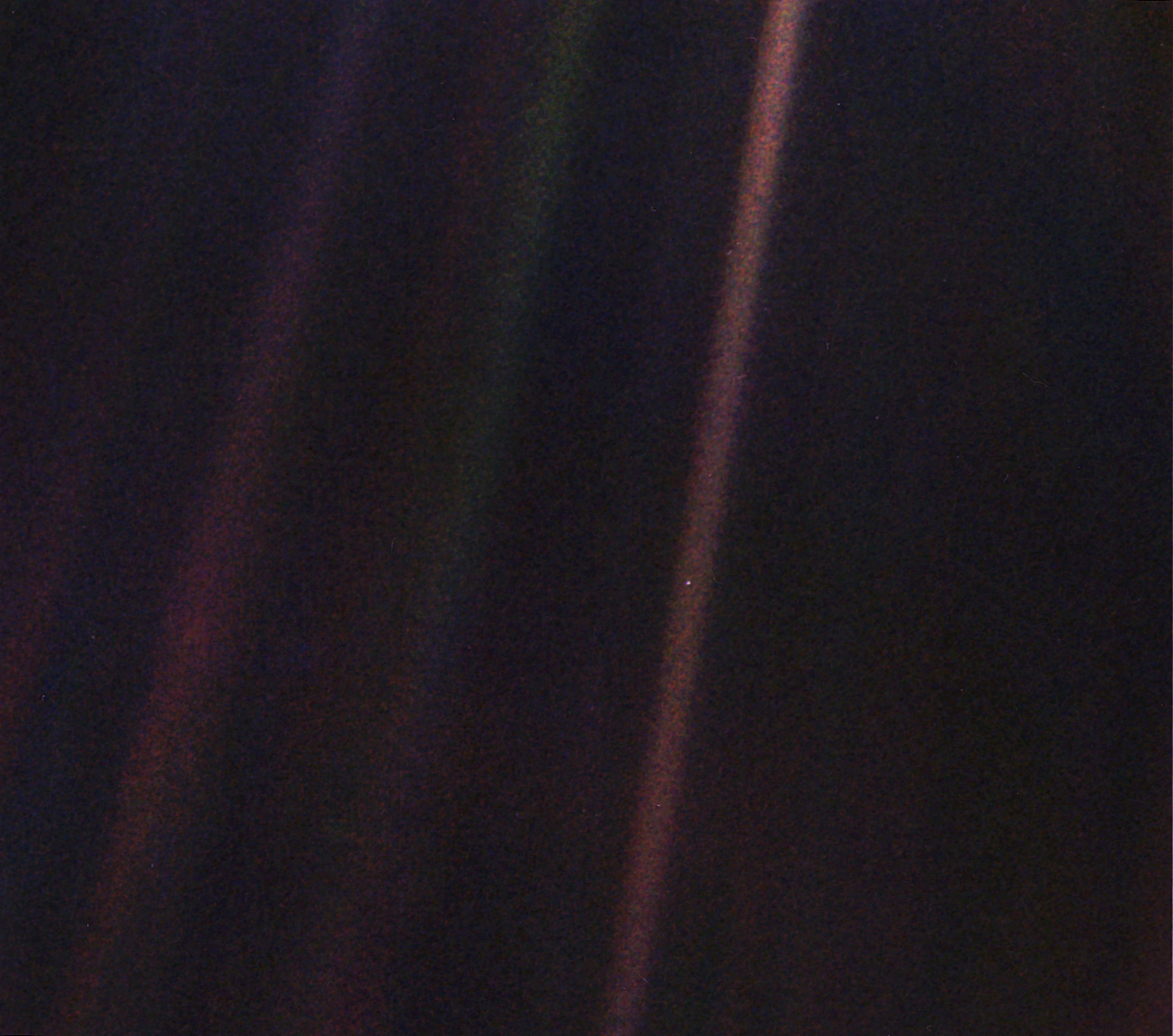
"Pale Blue Dot" Voyager 1 photo of earth (NASA/JPL-Caltech)
“Pale Blue Dot” Voyager 1 photo of Earth (NASA/JPL-Caltech)

“The Pale Blue Dot is a photograph of Earth taken Feb. 14, 1990, by NASA’s Voyager 1 at a distance of 3.7 billion miles (6 billion kilometers) from the Sun.”

*A year or so ago, a friend reminded me of this inspiring prose “The Pale Blue Dot” by Carl Sagan (copied below) inspired by the NASA image above… and the ever-increasing importance of finding and supporting the interests we ALL share on this tiny planetary sphere we call home:
“Look again at that dot. That’s here. That’s home. That’s us. On it everyone you love, everyone you know, everyone you ever heard of, every human being who ever was, lived out their lives. The aggregate of our joy and suffering, thousands of confident religions, ideologies, and economic doctrines, every hunter and forager, every hero and coward, every creator and destroyer of civilization, every king and peasant, every young couple in love, every mother and father, hopeful child, inventor and explorer, every teacher of morals, every corrupt politician, every “superstar,” every “supreme leader,” every saint and sinner in the history of our species lived there-on a mote of dust suspended in a sunbeam.
The Earth is a very small stage in a vast cosmic arena. Think of the endless cruelties visited by the inhabitants of one corner of this pixel on the scarcely distinguishable inhabitants of some other corner, how frequent their misunderstandings, how eager they are to kill one another, how fervent their hatreds. Think of the rivers of blood spilled by all those generals and emperors so that, in glory and triumph, they could become the momentary masters of a fraction of a dot.
Our posturings, our imagined self-importance, the delusion that we have some privileged position in the Universe, are challenged by this point of pale light. Our planet is a lonely speck in the great enveloping cosmic dark. In our obscurity, in all this vastness, there is no hint that help will come from elsewhere to save us from ourselves.
The Earth is the only world known so far to harbor life. There is nowhere else, at least in the near future, to which our species could migrate. Visit, yes. Settle, not yet. Like it or not, for the moment the Earth is where we make our stand.
It has been said that astronomy is a humbling and character-building experience. There is perhaps no better demonstration of the folly of human conceits than this distant image of our tiny world. To me, it underscores our responsibility to deal more kindly with one another, and to preserve and cherish the pale blue dot, the only home we’ve ever known.”
― Carl Sagan, Pale Blue Dot: A Vision of the Human Future in Space

sphere inside dodecahedron (inside rotating circular hoops) frame from the movie "Contact" by Carl Sagan

Recalling a cameo role played by a dodecahedron – a symbol for “Ether” (or Spirit) according to Plato – in a major motion picture, I recently re-watched (and enjoyed from a very different perspective) a movie I hadn’t seen in decades, Contact, written by Carl Sagan and Ann Druyan, starring Jodie Foster and Matthew McConaughey. The two stars seemed to search for meaning via science and religion respectively. It would appear that neither can find what they are searching for in isolation, just as we miss the “big picture” when we exclude other grander perspectives, putting our tiny lives in context. The very touching scene (toward the end of the movie when her dodecahedral “craft” fulfills its mission of transcending our understanding of space and time) where Foster’s character is reunited with her father in perhaps “another dimension” suggests that only our limiting perspectives and beliefs needlessly constrain us.

I recall attending a lecture in San Francisco, California in the 1970s by Dr. Ramamurti S. Mishra who compared science to a blind man and religion to a lame man; they are far more effective when they teamed up by the lame man metaphorically riding on the blind man’s shoulders. We’re all – it would seem – like individuals trying to make sense of our isolated perspectives like the proverbial “Blind men and an elephant.”

The movie also featured cameo appearances (in terms of locations) by the (now defunct) Arecibo Observatory Radio Telescope – a sizable geometric structure! – and the Very Large Array (VLA) Radio Telescope (a two-hour drive from Albuquerque, 50 miles west of Socorro, New Mexico which my wife & I visited a couple of decades ago) consisting of movable large radio telescope dishes on railroad tracks, allowing the virtual aperture to be adjusted (or something like that; my recall of the science is a bit rusty.) Both of these facilities employ lots of geometric engineering!

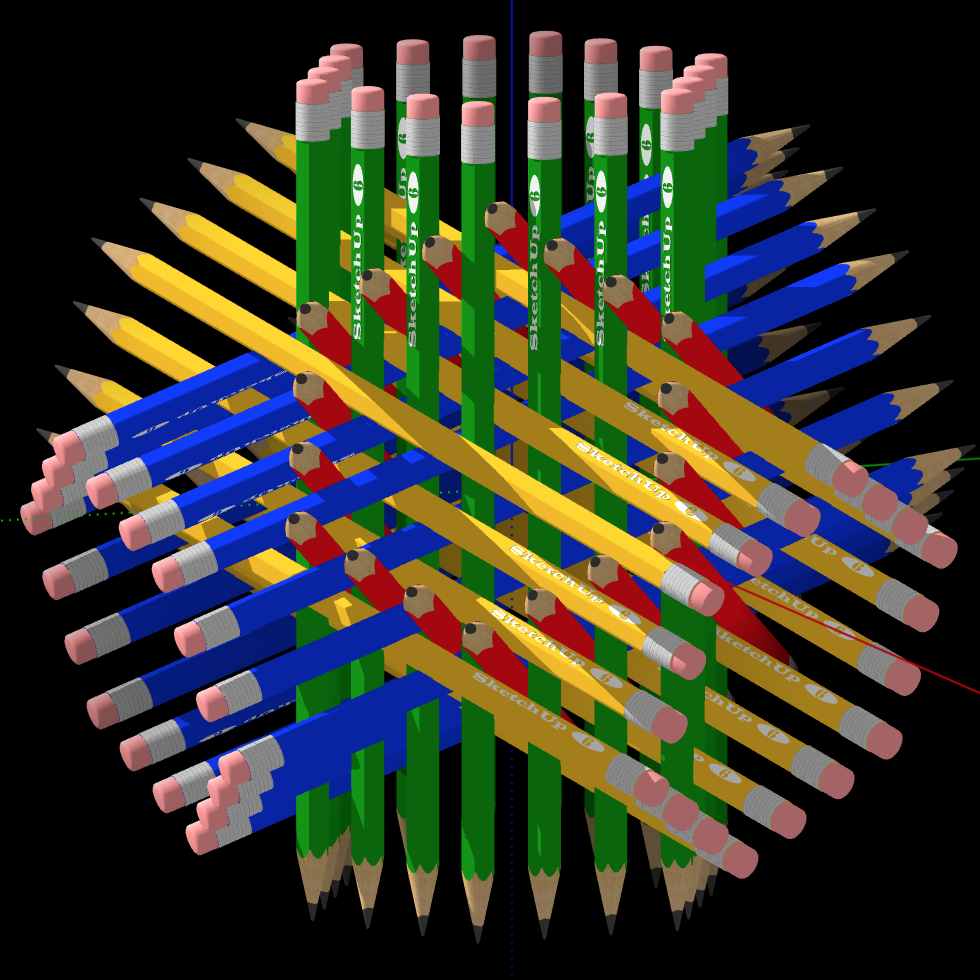
What prompted watching the Contact movie again (via a YouTube sidebar suggestion) was this brilliant video clip by Sagan (from his Cosmos series) that related 2D to 3D to 4th-dimensional polytopes – “flatland” squares to cubes t0 HyperCube tesseracts – and inspired my pencil metaphor decades later.


Plato (who studied and reported Socrates) suggested that symbols are not the source they represent. So if geometric symbols (such as spheres, dodecahedra, and the like) merely represent the eternal ideas that outlast and transcend the specific ephemeral instances of the forms that point to the concepts, principles, laws, and ideas they represent, it would behoove us to keep looking for the reality behind and beyond the forms that are limited by the particular spaces and times they appear to inhabit. Mind envelops matter; the Source contains – but is not limited by – symbols, which are mere shadows of what they represent, as Plato’s Allegory of the Cave would suggest. The content of the mental universe is more profound than any examples in form could possibly convey.

If you scroll down on any page of this website, you will notice a symbolic hand with a forefinger pointing up; this image was cropped from Plato’s representation in “The School of Athens.” Read more about this in a post from earlier this year.

Filed Under: 3D Geometries, Platonic Solids, polyhedra, sacred geometry architecture, sacred geometry art, sacred geometry news, sacred geometry videos

Circle as symbol: Inclusion or exclusion?

Friday, 31 May 2024 by Bruce Rawles

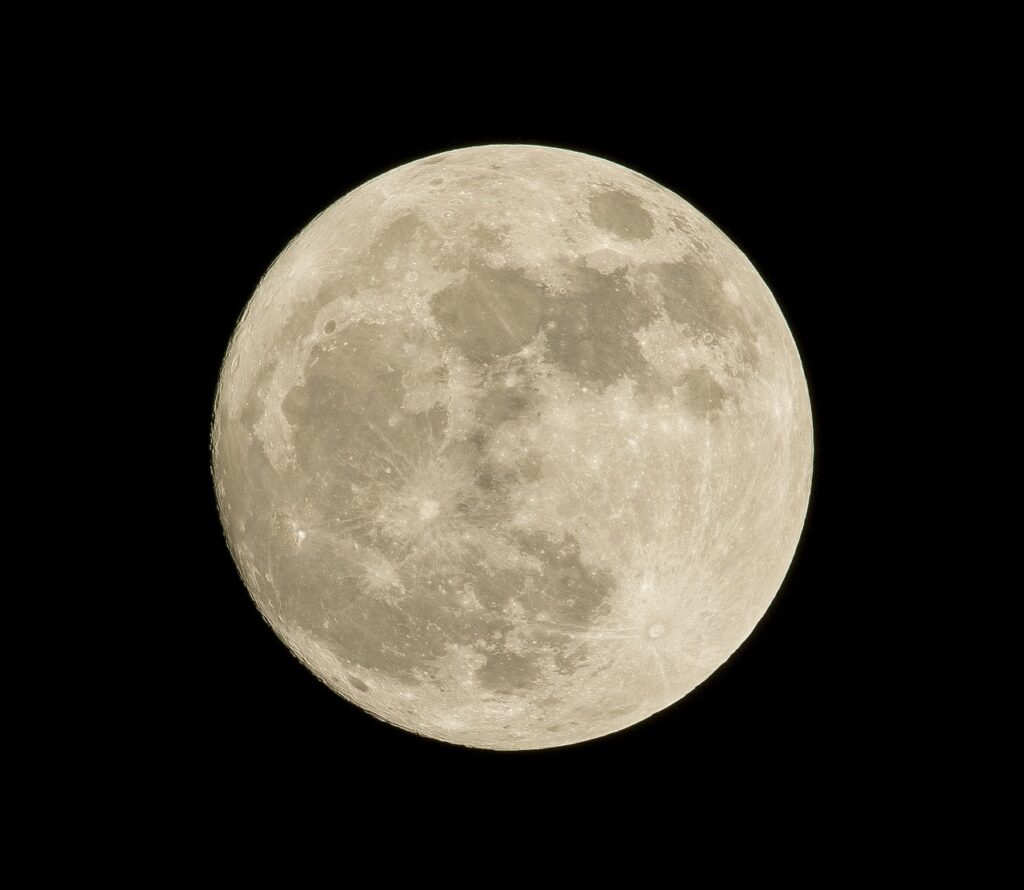
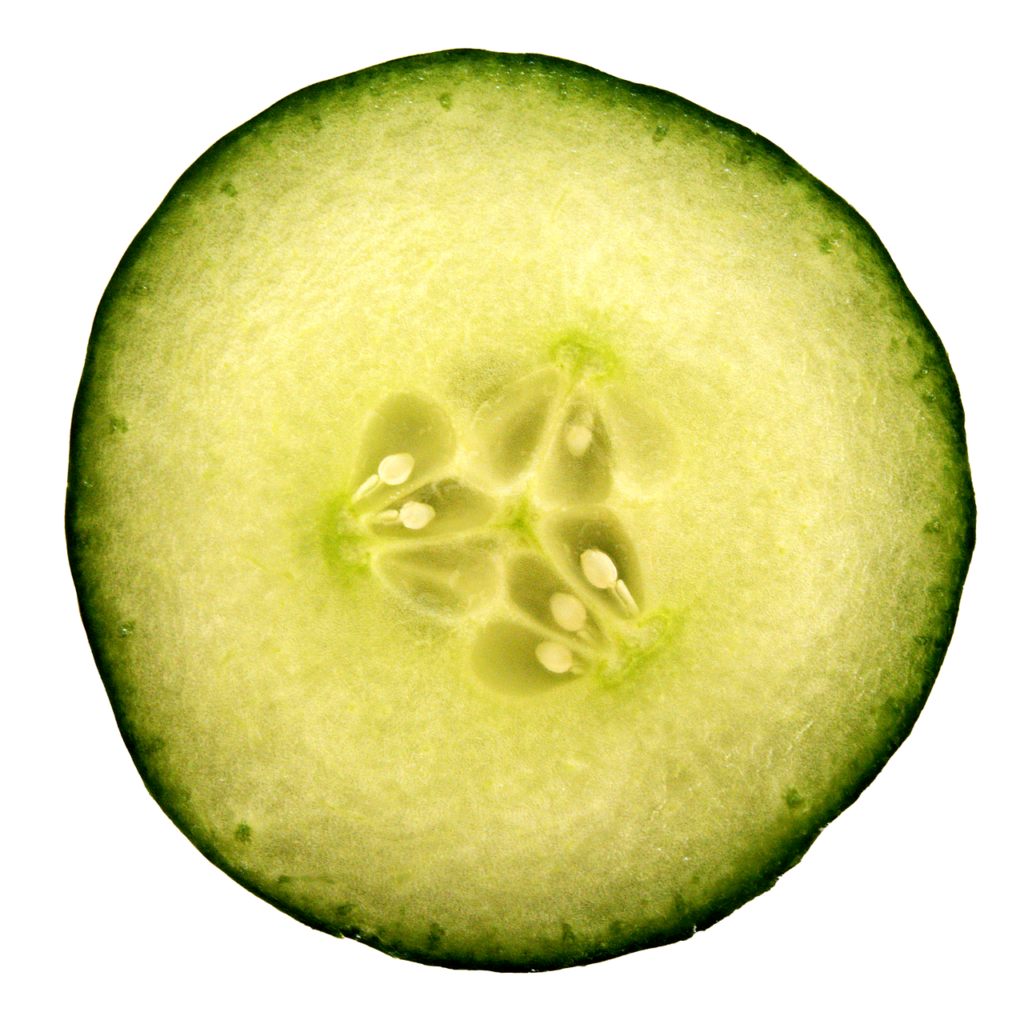
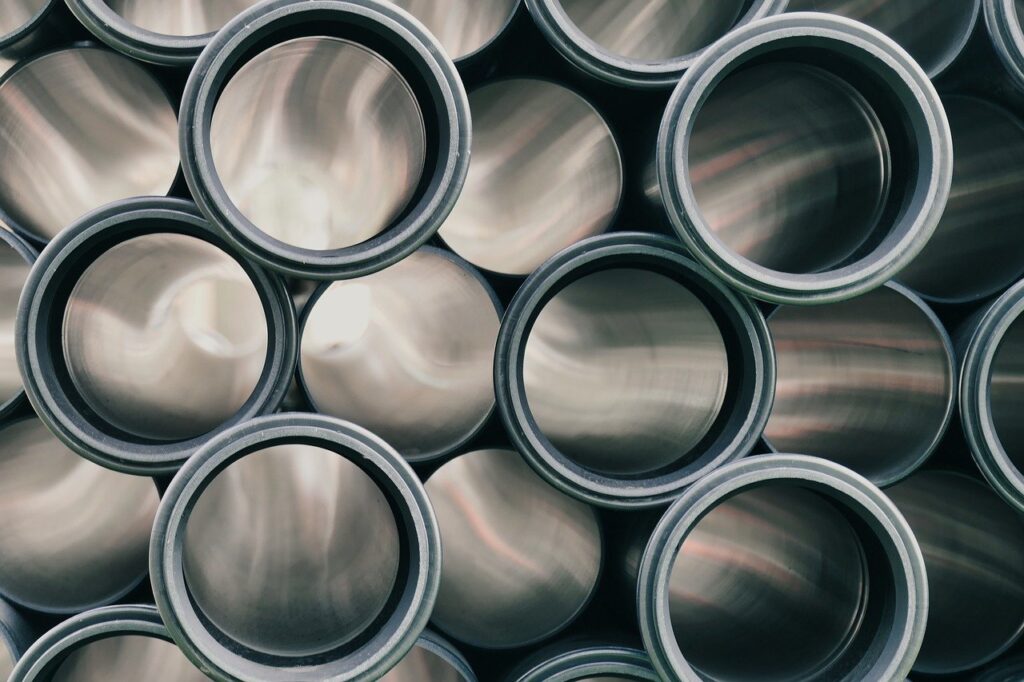
The Introduction to this website (Sacred Geometry Introductory Tutorial) begins with a geometric symbol that is perhaps the simplest and yet most profound – the circle. Circular patterns and archetypes appear in countless variations in nature, art, architecture, engineering, and just about every area of life we can imagine. Here are a few familiar examples; I’m sure you can think of countless others, both microscopic, macroscopic (telescopic) and in between, in all dimensions of space, time, metaphor, and thought. We touched on the sphere (Music of the Spheres – The Planets) in a recent post; the 2-dimensional counterpart to the sphere is the ubiquitous circle and provides the foundation for it’s rotation into spheres of any number of dimensions – the quintessential template for polytopes beyond our imagination. Rather than getting boggled or bogged down with those mind-warping ideas, let’s return to the simplicity of the circle.

circle: eyecircle: full moon circle: cucumber cross-section circle: water droplet and concentric ripples circle: pipe cross-sections circle: generic clock face

All of these visual examples are reflections of a form reflecting an ideal; here is what appears in the Introduction to this website (slightly edited from the original):

The Sphere


(charcoal sketch of a sphere by Nancy Bolton-Rawles)

Starting with what may be the simplest and most perfect of forms, the sphere is an ultimate expression of unity, completeness, and integrity. No point of view is given greater or lesser importance; all points on the surface are equally accessible and regarded by the center from which all originate. All atoms, cells, seeds, planets, and globular star systems echo the spherical paradigm of total inclusion, acceptance, simultaneous potential and fruition, the macrocosm and microcosm.

The Circle

The circle is a two-dimensional shadow of the sphere, regarded throughout cultural history as an icon of the ineffable oneness; the indivisible fulfillment of the Universe. All other symbols and geometries reflect various aspects of the profound and consummate perfection of the circle, sphere, and other higher dimensional forms of these we might imagine.

The ratio of the circumference of a circle to its diameter, Pi, is the original transcendental and irrational number. (Pi equals about 3.14159265358979323846264338327950288419716939937511…) It cannot be expressed in terms of the ratio of two whole numbers, or in the language of sacred symbolism, the essence of the circle exists in a dimension that transcends linear rationality. Our holistic perspectives, feelings, and intuitions encompass the finite elements of the ideas within them, yet have a greater wisdom than can be expressed by those ideas alone.


When I was writing my first book (Sacred Geometry Design Sourcebook – Universal Dimensional Patterns), the cover art as well as a majority of the 1300 images (including corner “thumbnail” variations) feature circles, either directly or indirectly, so I made a graphical index, rather than a text-oriented one; the dots that dominate the first column (circles and spheres) in these 2 pages hint at the importance of these primal, archetypal, quintessential symbols: circles and spheres.

Sacred Geometry Design Sourcebook - graphical index - page 1 Sacred Geometry Design Sourcebook - graphical index - page 2


When I was writing my second book (The Geometry Code: Universal Symbolic Mirrors of Natural Laws Within Us; Friendly Reminders of Inclusion to Forgive the Dreamer of Separation) I also used a “Fruit of Life” symbol (6 circles around an inner circle) to represent the interconnectedness and inseparability of all aspects of what is eternally true, reflected in the 7 Hermetic Laws of antiquity. These 7 circle-framed images (along with the other supporting graphics) are all set within a circle which intuitively reminds us of the infinite and eternal in our minds.

On page 62 of the Geometry Code book, I shared an idea that I find increasingly more helpful in both pragmatic and profound ways. Here is the graphic and supporting text for this portion of the chapter “Mentalism: 1st of the 7 Hermetic Laws”:

The Wikipedia definition of scapegoat is “Scapegoating is the practice of singling out one child, employee, member of a group of peers, ethnic or religious group, or country for unmerited negative treatment or blame.”

circle symbols: inclusive? or exclusive?

The biblical story of the scapegoat offers a very helpful clue. It employs the symbol of the circle as a mnemonic for practicing inclusion or exclusion. In historic accounts, the guilt (sins) of the community were projected onto a goat, which was then banished to the realms outside the inner flock – peripheral to the circle of what we’re willing to accept or allow in our minds. Everything within the circle is OK (innocent as lambs), and if you’re outside, tough luck, goat! The problem is that the very premise that divides wholeness into parts is flawed, and even the ‘good’ that remains begins to be suspect because of the inherent lack of trust. The circle closes in and eventually strangles the dualis- tic split mind into oblivion; it becomes a singularity and winks out; but not without a lot of grief and struggle!

Seeing ‘others’ as ‘out there’ throws away the gifts they bring to us each ʻpresentʼ moment that we lucidly bring their symbolic contribution as mirrors of self back into mind. This works for both seemingly positive and negative experiences, until ultimately we realize that any so-called good experience (e.g. pleasure) in the world is no better or worse than any so-called bad experience (e.g. pain) in the world, because those experiences are all projections of a massive dream that we’ve made up to reinforce the belief in separation. Ego can use any excuse to squander the gifts by assigning ‘otherness’ to others and losing the meaning that the intrinsic connection – always in mind – can bring.

Sometimes it’s blatant when we intentionally erect an inner wall and make a fence around those we ‘like’ or agree with and those we’re not so fond of. This has nothing to do with behavior since it would be impossible to physically assist or care for everybody (let alone all the animal, vegetable, and mineral ‘life’ on just this third spheroid helically spinning around our favorite star). However, it has everything to do with inwardly caring for all, equally. This is an egalitarian ideal we probably all pay lip service to in various ways, but then often find ourselves annoyed with certain ‘others’ or internally profiling a group (whether a species, family, region, nation, or galaxy) and then suddenly – Whoops! – there’s that nasty we/they paradigm in action again, begging for our self-forgiveness.


The profound helpfulness of these circle symbols is evident when we consider that a circle of infinite scope – total inclusion – has no one left out, no one excluded, no one denied, and all equally vital to the whole; each mind embracing this idea IS the whole seen holographically. When, on the other hand, we go with the polarizing default of inner/outer, we/they, us/them, no matter where the line is drawn – or whatever shape, for that matter, a circle is just a placeholder for any exclusionary perspective – we’re always at war with the alleged other in our mind. No peace is possible when the foundation for peace (total inclusion) is denied.

The pragmatic benefit of identifying with the “infinite circle” that includes all of us is that – with considerable practice! – we can train our minds to realize that we can truly afford to “Be kind, for everyone you meet is fighting a hard battle.” Even if there’s no instant transformation/manifestation in the surreal world of our space-time dreams, there is always an opportunity to forgive ourselves for dreaming of separation by seeing our shared interest of peace and benefitting from a tranquil mind in the process, regardless of what seems to be happening around us!

Since (in the USA at least) this is an election year, I try to remind myself that we only get to vote every year or so, but we vote for either the infinite (transpersonal) circle of embracing everyone in our gracious consideration – or the finite polarizing (personal) circle which leaves some out; our scapegoats outside the circle become our projected “goat-scape” yet the problem of our dualistic dueling dream has never left our mind.

Filed Under: 2D Geometries, 3D Geometries, Hermetic Laws, sacred geometry architecture, sacred geometry art, sacred geometry news

GeometryCode.com Survey

Friday, 1 December 2023 by Bruce Rawles

Thanks to all of you for your continued and ongoing support of this labor of love website!

It has been quite a while since we’ve had a reader survey or poll! Here are the results of the last one from the turn of the millennium:


Here’s an opportunity to share your geometric interests, passions, curiosities, favorite topics, and whatever you think will be helpful, useful, and fun!

Please share your interests, wish lists, and thoughts on existing and unexplored subjects via this survey to help guide our content priorities.

Loading

Filed Under: 2D Geometries, 3D Geometries, 4D Geometries, applications, Archimedean Solids, audio, coloring books for adults, Fibonacci Numbers, Fractal Geometry, golden ratio, Hermetic Laws, modern physics, Numbers and Proportions, Platonic Solids, polyhedra, sacred geometry animation, sacred geometry apps, sacred geometry architecture, sacred geometry art, sacred geometry books, sacred geometry calendars, sacred geometry coloring books, sacred geometry interviews, sacred geometry jewelry, sacred geometry physics, sacred geometry toys, sacred geometry videos

  • « Go to Previous Page
  • Page 1
  • Page 2
  • Page 3
  • Page 4
  • Go to Next Page »

Primary Sidebar

iMac with LightSOURCE Sacred Geometry screensaver

iMac with GeometryCode screensaver example image

GeometryCode: Featured Products

The Geometry Code: book

Universal Symbolic Mirrors of Natural Laws Within Us; Friendly Reminders of Inclusion to Forgive the Dreamer of Separation

learn more… Available Now!

The Geometry Code: Universal Symbolic Mirrors of Natural Laws Within Us; Friendly Reminders of Inclusion to Forgive the Dreamer of Separation - by Bruce Rawles (front cover artwork)

Buy The Geometry Code book and/or Kindle edition


Sacred Geometry
Design Sourcebook

learn more…


Buy this classic reference book


Sacred Geometry Art:
prints, cards, apparel

learn more…


Dodecahedral Bubble


Buy prints, cards, apparel


Martineau Solar System:
prints, cards, apparel

learn more…


Venus and Mars Per Martineau-cropped thumb


Buy prints, cards, apparel

GeometryCode: Recommendations

(GeometryCode.com Favorites on Amazon.com: books, Kindle, videos, art, software, tools, music, etc. will return here soon!)

Astro-logix - a unique system of glow-in-the-dark hubs and day-glow cylinders to make a phenomenal variety of 2D and 3D geometric models
Bluehost - our GeometryCode.com webhost and domain registrar offers superb customer service, technical expertise and value; tops in every respect!
Sacred geometry Jewelry Sacred geometry jewelry by artist David Weitzman Ka-Gold Related Content: Flower of Life, Seed of Life, Golden Spiral, Fruit of Life, Vesica Piscis, Star tetrahedron "Merkaba", Fibonacci Whirling Squares Spiral "Phi", Metatron's Cube, Chambered Nautilus, Labyrinth, Torus Tube, Tetractys, Sri Yantra mandala, Tree of Life, Hexagram (Star of David).
Fractiles Fractiles - Versatile geometric toys made of magnetic diamond shaped tiles
emWave Desktop Heartmath - Biofeedback using the heart's mathematics of interconnection
SacredGaiametry
Iconnect
Metaforms - chrome, bronze and gold-plated geometric pendants, 3D forms and more
Folding Circles - Books, Videos and Supplies - by Bradford Hansen-Smith
RedHen Books and Toys
Unique, hard-to-find educational materials, toys and books such as Bradford Hansen-Smith's circle folding videos, books and supplies.

ZomeTool Zometool - my favorite 3D creative tool/toy system. I use mine for demos and exploration.
More details on our complete list of affiliates; thanks for supporting us by using these links!

Disclosure: If you use our links to purchase featured products and services, we receive compensation from these companies (at no extra cost to you). We select on the basis of excellent performance and value, and, as much as possible, from our own use and testing. We're independently owned. Opinions expressed here are ours. We appreciate your support by purchasing from these links. The intent of this disclosure is compliance with the FTC's Guides Concerning the Use of Endorsements and Testimonials in Advertising.

Fibonacci Quarterly - Official Publication of the Fibonacci Association (since 1963)

Recent GeometryCode Posts

  • Highlights from the November Post Archives on GeometryCode.com
  • Highlights from the October Post Archives on GeometryCode.com
  • Highlights from the September Post Archives on GeometryCode.com
  • Solar System Geometry (per Martineau) Wall Calendars for 2027
  • Highlights from the August Post Archives on GeometryCode.com

Visit the archive site (authored by the late William Goldstein, a.k.a. Will Gold)
The New Invisible College - A Gateway to the Mystical Tradition of the West

The New Invisible College - Chartres-sacred-geometry.com

(Updated 14Oct2022): I recently had the good fortune to discover a website with some superb content … [Read More...] about The New Invisible College: Will Gold’s Chartres-sacred-geometry.com website


Here’s where you can let us know how we can support you ... and how you can support us! Our virtual “tip jar” accepts a variety of methods of making financial donations; any greatly appreciated! You can use Zelle, Venmo, Wise, PayPal, and a check or money order in US dollars works as well.

Copyright © 1997-2025 · Bruce Rawles · customized by Intent Design Studio · hosted by BlueHost · WordPress

Manage Consent
To provide the best experiences, we use technologies like cookies to store and/or access device information. Consenting to these technologies will allow us to process data such as browsing behavior or unique IDs on this site. Not consenting or withdrawing consent, may adversely affect certain features and functions.
Functional Always active
The technical storage or access is strictly necessary for the legitimate purpose of enabling the use of a specific service explicitly requested by the subscriber or user, or for the sole purpose of carrying out the transmission of a communication over an electronic communications network.
Preferences
The technical storage or access is necessary for the legitimate purpose of storing preferences that are not requested by the subscriber or user.
Statistics
The technical storage or access that is used exclusively for statistical purposes. The technical storage or access that is used exclusively for anonymous statistical purposes. Without a subpoena, voluntary compliance on the part of your Internet Service Provider, or additional records from a third party, information stored or retrieved for this purpose alone cannot usually be used to identify you.
Marketing
The technical storage or access is required to create user profiles to send advertising, or to track the user on a website or across several websites for similar marketing purposes.
  • Manage options
  • Manage services
  • Manage {vendor_count} vendors
  • Read more about these purposes
View preferences
  • {title}
  • {title}
  • {title}